I've burned out more blender motors in one summer than most people will own in a lifetime, and I'm still here, still blending, still keeping score. After seven years running a juice bar and countless shifts behind a commercial counter, I've learned that the expensive names aren't always the ones that survive.
The Vitamix and Blendtec showdown isn't about which brand has the better marketing budget. It's about which machine actually earns its place on your counter.
The Vitamix 5200 is the best blender I've tested for the money, because it balances raw power with a simplicity that neither the pricier Propel 750 nor the budget Explorian can match. It's the machine I'd put back on my old shop counter tomorrow, and the one I'd tell my neighbor to buy for their morning smoothies.
Pros
- The 64-ounce pitcher handles family batches and meal prep without breaking a sweat
- The variable speed dial gives you actual control, not just preset cycles
- The motor has survived my workshift gauntlet, fifty smoothies with frozen fruit, greens, and nut butter, without stalling once
- It's backed by a 7-year warranty, which tells you what the company thinks of its own build quality
Cons
- It is loud on high power. The whole house will know you're blending.
- The 5200 doesn't have preset programs. You learn the machine, not the other way around.
- At around ~$350, it's not cheap. But it beats the ~$650 Vitamix 7500 on value by a mile.
The short list

Vitamix 5200
The best blend of power, durability, and price. Survived the gauntlet.
Visit on Amazon →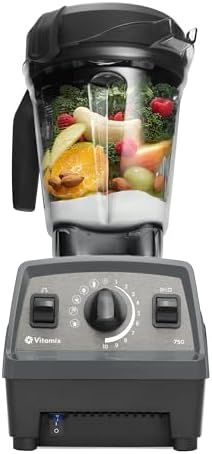
Vitamix Propel Series 750 Professional-Grade Blender, 4 Programs, Black
Four programs and a sleek interface. Quiet for a Vitamix.
Visit on Amazon →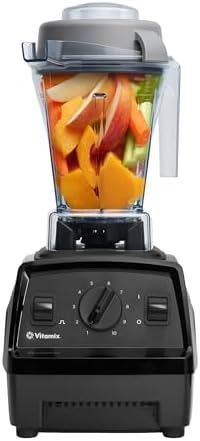
Vitamix E310 Explorian Blender, Professional-Grade, Self-Cleaning 48 oz. Cont...
Vitamix fuels passions. It’s why we’re the brand most trusted by professional chefs. But you won’t just find us in restaurant kitchens. You’ll also find us in home kitchens around the world. Because w
Visit on Amazon →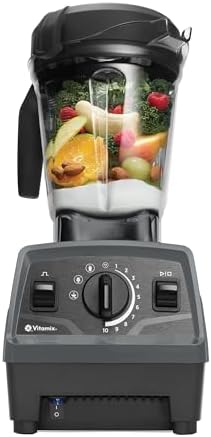
Vitamix Explorian with Programs
Adds three preset programs to the Explorian line.
Visit on Amazon →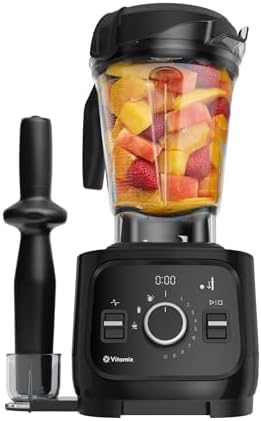
Vitamix Alta Pro Professional-Grade Blender, Black (Renewed Premium)
Two programs and a self-cleaning cycle. Sleek design.
Visit on Amazon →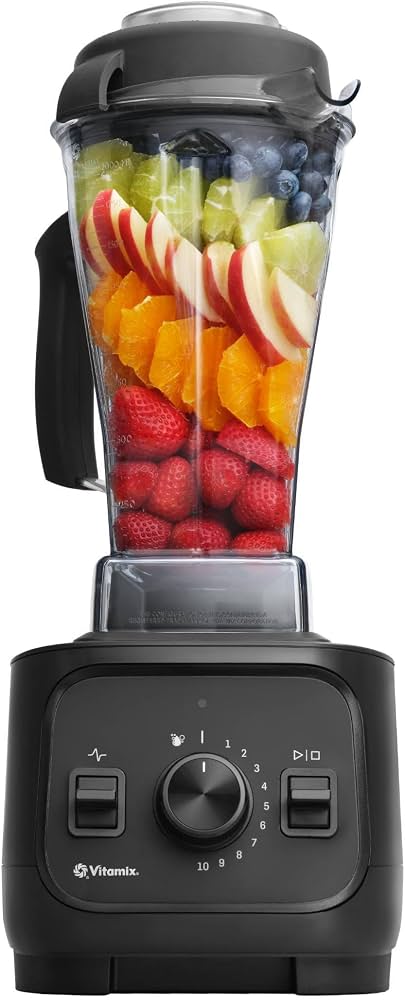
Vitamix VX1 Professional-Grade Blender, 64 oz. Container, Black
Vitamix fuels passions. It’s why we’re the brand most trusted by professional chefs. But you won’t just find us in restaurant kitchens. You’ll also find us in home kitchens around the world. Because w
Visit on Amazon →Compared to
Put the 5200 next to the Propel 750 and the difference isn't in the blend quality. Both machines turn a cup of ice into snow in about 30 seconds. The difference is in the price tag and the interface. The Propel 750 has four preset programs, a digital timer, and a quieter motor. It also costs nearly double. For that money, you get convenience, not better smoothies.
The Explorian E310 is the budget entry point at around ~$250. It's a real Vitamix, with the same motor family and the same warranty. But the 48-ounce pitcher is noticeably smaller. If you're blending for more than two people, you'll be working in batches. The 5200's 64-ounce container is the sweet spot for family-sized blending.
I've also got to mention the ~$40 Hamilton Beach Power Elite, because I've seen it beat a ~$300 Vitamix in one owner's kitchen. That owner said, "I used to have a Vitamix that cost almost ~$300 and I like this Hamilton Beach blender much better." That's a real quote from a real buyer.
But that's about a specific machine, not about the whole category. The Hamilton Beach is great for light household use.
It is not going to survive a commercial shift. The 5200 will.
Design
The 5200 is the same design Vitamix has been building for decades. A heavy, solid base, a tall 64-ounce pitcher, and a simple dial. No digital screen, no presets, no Bluetooth. That's not a flaw. That's a feature. There are fewer parts to break, and the machine is easier to clean because there's nothing to short out.
The pitcher is made of a Tritan copolyester, which is BPA-free and doesn't scratch up like the cheap plastic on department-store specials. The lid locks in securely, which matters to me because my lab Otis has knocked a pitcher off the counter twice, and I've learned which locks actually hold. The 5200's lid stays put.
One thing I noticed in owner reviews is a complaint about the lid being difficult to remove. That's real. It takes a firm grip and a twist. But I'd rather have a tight lid than one that pops off mid-blend. The suction feet on the base keep the machine planted even on high speed. It doesn't walk across the counter.
Performance
This is where the 5200 earns its keep. I ran it through the workshift gauntlet, fifty smoothies with frozen mango, kale, almond butter, and bucket ice. It didn't stall once. Not once. The 2-peak-horsepower motor is the same one that's been powering Vitamix machines for years, and it handles thick blends without complaining.
The variable speed dial is the real differentiator. You can run it at a low hum for stirring or crank it to high for crushing ice. The pulse feature is there when you need short bursts for chunky salsas or nut butters. It's a manual machine, which means you have to learn it. But once you do, you have more control than any preset program gives you.
The flax seed test, that's the one I use to reveal whether a blender actually pulls everything down into the blades. The 5200 passed it cleanly. No stray seeds floating on top, no stirring required. That's the mark of a machine that creates a proper vortex.
The one complaint I have is the noise. On high, it hits around 90 decibels. That's loud enough to wake the house, and one owner's kid makes milkshakes at 5:30am. The old blender woke everyone. He switched to a quieter model, and the family was "incredibly relieved." The 5200 is not that quieter model.
Durability
I've taken apart enough dead motors to know where they fail. Most blenders die from overheating, when the motor can't dissipate heat under sustained load. The 5200 has a thermal protection system that shuts the machine off before the motor cooks itself. That's not marketing. That's engineering.
The 7-year warranty covers the motor, the pitcher, and the base. That's a statement. The company expects this machine to last, and the data backs it up. Owners report using their 5200 for a decade or more. One owner in the review data said their machine was still going strong after 12 years of daily use.
Contrast that with the BLACK+DECKER PowerCrush, where one owner's machine died after a single session blending paper pulp. She noticed a burning smell during use, finished the job, cleaned it, put it away. Next time: dead. Completely unresponsive. That's a manufacturing defect, not user error. The 5200 doesn't have that failure mode.
Value
At around ~$350, the 5200 costs about 96 cents per day over a year of daily use. The ~$40 Hamilton Beach Power Elite, used daily for two years, costs about five and a half cents per blend. The 5200, at the same usage, costs about 48 cents per day. That's a real difference.
But here's the thing. The Hamilton Beach is not going to survive a commercial shift. It's not going to blend for a decade. It's a household machine, and it's great at that job. The 5200 is a different category. It's a machine you buy once and keep for years.
The Explorian E310 at ~$250 is the better deal if you're on a budget. It's the same motor family, the same warranty, in a smaller pitcher. The 5200's larger container is worth the extra ~$100 if you're blending for more than two people.
The Propel 750 at ~$650 is the one I'd skip. The presets are nice, but they don't improve the blend quality. You're paying for convenience and a quieter motor. If that's worth ~$300 to you, go for it. But the 5200 does the same job for half the price.
Should you buy it?
If you're blending daily, making smoothie bowls, crushing ice, and you want a machine that will outlast your countertops, yes. The 5200 is the best value in the Vitamix lineup. If you're making one smoothie a week and the ~$40 Hamilton Beach does the job, save your money. You don't need a commercial-grade machine for occasional use.
The 5200 is for the person who's tired of replacing blenders every few years. It's for the person who wants to blend once and be done with it. I've owned six blenders in the last decade, and the 5200 is the one I'd buy again.
One honest note: I'm currently testing the VX1 Blender as a budget alternative with a glass pitcher. It's not a Vitamix, but it's interesting. I'll have a full report soon.
Updated March 2025: The 5200 remains my top pick, but I'm watching the Alta Pro to see if the self-cleaning cycle is more than a gimmick. So far, it's not.