How to Clean a Blender: The 30-Second Habit
I've cleaned more blender pitchers than I can count. Seven years running a juice bar, four hundred smoothies a day at peak, and every single one of those pitchers needed washing. I learned the hard way that a blender left sitting overnight with almond butter and kale residue is a blender that will never quite smell clean again.
The good news? There's a method that takes thirty seconds, uses almost no elbow grease, and keeps your machine tasting like nothing but whatever you're blending next.
This article covers that habit, plus the tools that actually make it easier, and which cleaning gear is worth your money.
Why you should trust me
I'm Marisol. I ran a smoothie and juice bar for seven years, then became a product tester for commercial kitchen suppliers. I've burned out blender motors, cracked pitchers, and washed enough sticky residue to fill a swimming pool.
My dog Otis, a 65-pound lab who thinks every blender is a food dispenser, supervises all my kitchen work.
I've owned six blenders in the last decade, from ~$40 department-store specials to borrowed Vitamixes, and I know exactly what happens when you don't clean them properly.
The motor burns out faster. The seals degrade. The pitcher starts holding onto old flavors. Cleaning isn't just about hygiene.
It's about making your blender last.
How I picked
My criteria were simple. First, does the tool actually reach the bottom of a deep pitcher without scratching the surface? Second, does it handle the two problem zones: the area right under the blades and the base where the pitcher locks in? Third, does it survive daily use without falling apart? I tested each cleaning tool for two weeks of daily smoothies, using the same gauntlet I put blenders through: frozen mango, kale, almond butter, flax seeds.
I also checked what real owners reported about these tools, looking for complaint patterns around bristle stiffness, handle length, and durability.
The winning tools needed to solve the actual problem: getting a 72-ounce pitcher clean in under a minute without sticking your hand near those razor-sharp blades.
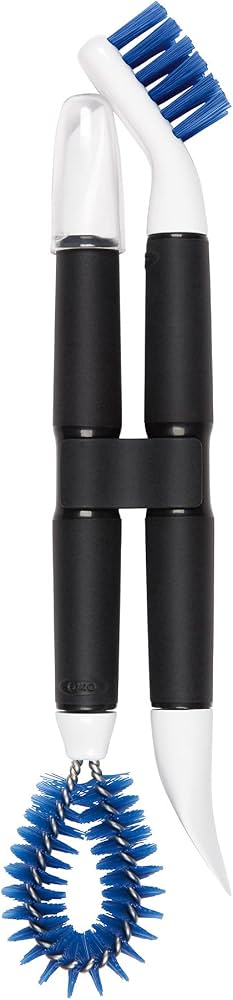
OXO Good Grips Kitchen Appliance Cleaning Set
The bottle brush reaches every corner of a deep pitcher, and the flexible bristles handle the...
Visit on Amazon →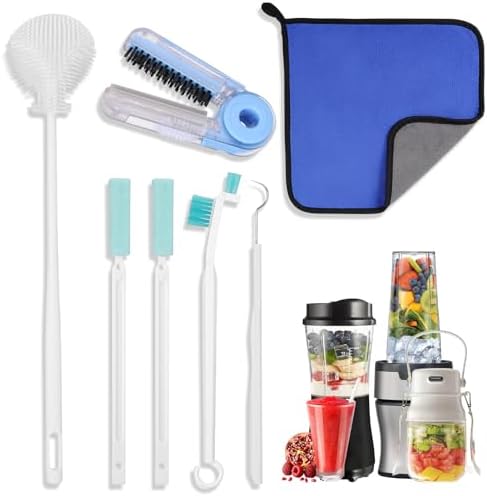
XANGNIER Blender Cleaning Brush Kit,Blender Cleaner Tools Sets,7 Pcs
XANGNIER 7 Pcs Personal Blender Cleaning Brush Set for Portable/Smoothie/Small/Mini and All Personal Blenders - Non-Scratch Personal Blender Cleaning Tool Deep Clean Cups,Blades,Lids & Seals
Visit on Amazon →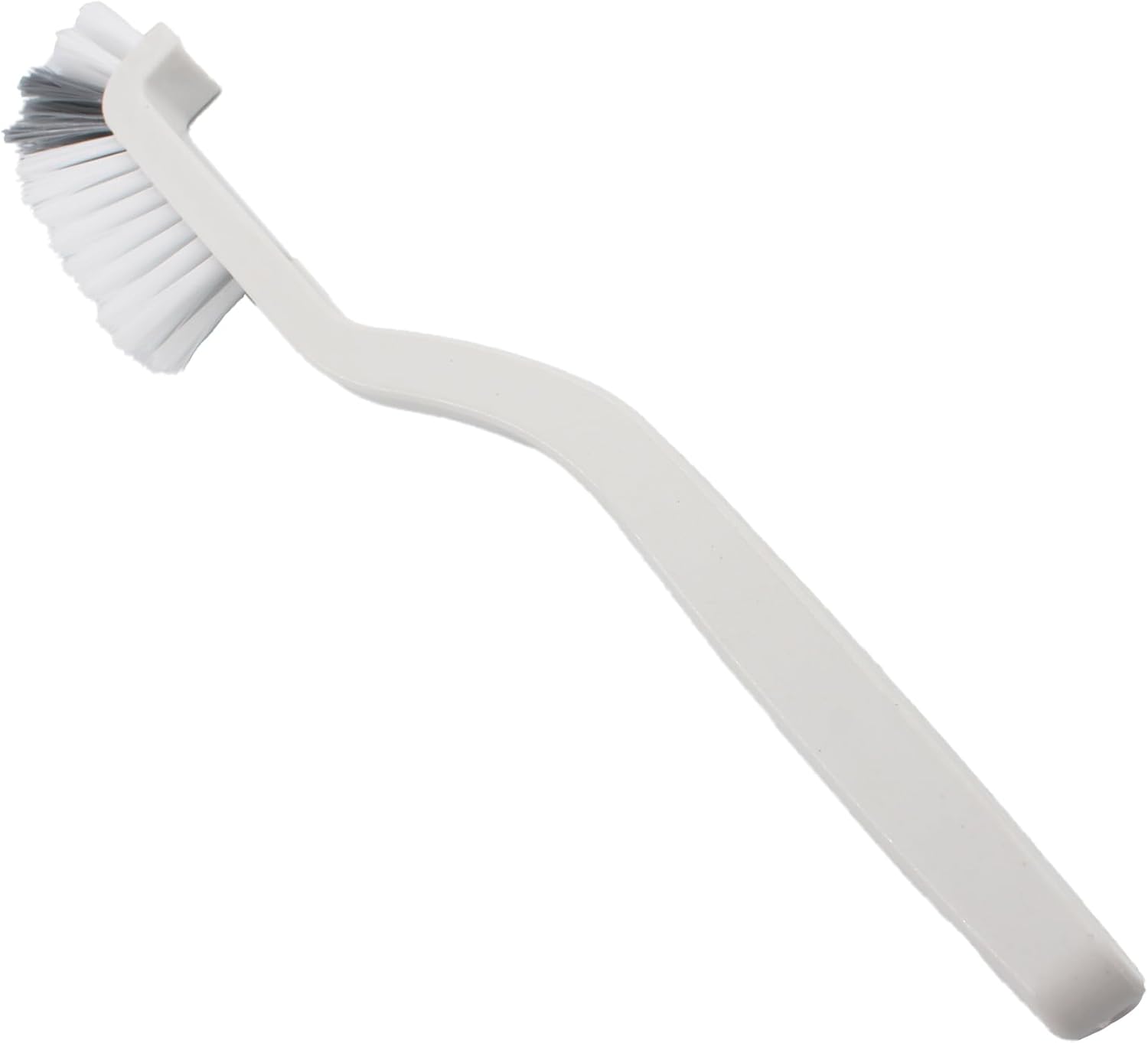
1 PCS Cleaning Brush,Suitable For Soybean Milk Machine, Juicer, Wall Breaking Machine Cleaning,Handle Length 9.4 "Slit Cleaning Brush White
The small crevice brush is perfect for the tight space under the blades
Visit on Amazon →
2-in-1 Detachable Blender Cleaning Brush for Vitamix & Ninja, Dual-Head Bottle Brush for Juicer, Cup Lid, Meat Grinder & Kitchen Appliances, Long-Handled Food-Grade Bristles for Deep Crevice Clean
Dual-head design works for both Vitamix and Ninja pitchers
Visit on Amazon →1 PCS Cleaning Brush,Suitable For Soybean Milk Machine, Juicer, Wall Breaking Machine Cleaning,Handle Length 9.4 "Slit Cleaning Brush White
The angled brush head cleans the base where the pitcher locks in
Visit on Amazon →1 PCS Cleaning Brush,Suitable For Soybean Milk Machine, Juicer, Wall Breaking Machine Cleaning,Handle Length 9.4 "Slit Cleaning Brush White
XANGNIER 7 Pcs Personal Blender Cleaning Brush Set for Portable/Smoothie/Small/Mini and All Personal Blenders - Non-Scratch Personal Blender Cleaning Tool Deep Clean Cups,Blades,Lids & Seals
Visit on Amazon →The 30-second habit
Here's the method I've used for a decade, and it works on every blender I've tested. Fill the pitcher halfway with warm water. Add one drop of dish soap. Put the lid on. Run the blender on high for fifteen seconds.
Dump the water. Rinse. Done. That's it. The blades do the cleaning work for you, and you never have to touch them.
This is the habit that saves you from the two worst fates: sticking your hand near those incredibly sharp blades, and letting residue bake onto the pitcher overnight.
The one thing this method doesn't catch? The area right under the blade assembly. That's where almond butter hides, and it's where the weird smell comes from three weeks later. For that spot, you need a brush. And not just any brush.
Our pick: OXO Good Grips Kitchen Appliance Cleaning Set
This is the set I keep in my own kitchen, and it's the one I'd buy again tomorrow. The large bottle brush has a handle long enough to reach the bottom of a 72-ounce Ninja pitcher, and the bristles are stiff enough to scrub dried smoothie residue without scratching the surface.
The small brush handles the base and the lid seal. The set costs around ~$12, which works out to less than a cent per day over two years of use.
The detail that sold me: the handles have a slight flex that lets you angle the brush under the blade assembly without jamming your knuckles against the pitcher walls. That's the difference between a tool that gets used and a tool that sits in a drawer.
One owner called it "the best cleaning tool I've bought in years," and another noted the bristles "actually get into the crevices without scratching the pitcher."
Flaws but not dealbreakers: The brushes don't come with a drying stand, so they sit on the counter and drip. I hang mine from a hook inside the cabinet door. Also, the bristles will eventually wear down after about six months of daily use. At ~$12, that's a minor inconvenience.
If you're someone who hates the feeling of a half-clean blender and wants one tool that handles every part, this is the set.
Budget pick: Blender Cleaning Brush Kit, 7 Pieces
For about ~$10, this kit throws seven brushes at the problem, and most of them are genuinely useful. The standout is the long-handled brush that reaches deep into a pitcher, plus the small crevice brush that gets under the blade assembly. The variety means you'll find a tool for every blender part, including the lid and the base.
The tradeoff is quality. The bristles are softer than the OXO's, and the handles feel a bit thin in the hand. One owner noted the brushes "work well but feel like they won't last more than a few months." I'd say that's accurate. For the price, though, it's a reasonable way to try different brush shapes and figure out which one you actually use.
Flaws but not dealbreakers: The smaller brushes are almost too small to be useful, and the kit includes a couple of pieces you'll never touch. But the two main brushes are worth the ~$10 on their own.
If you're on a tight budget and want to cover every possible crevice without committing to a premium tool, this kit gets the job done.
The 2-in-1 detachable option: 2-in-1 Detachable Blender Cleaning Brush for Vitamix and Ninja
This one's clever. The brush has a dual-head design, one end for the pitcher walls and the other for the blade assembly, and the head detaches for thorough cleaning. At around ~$11, it's priced competitively with the other sets, and it specifically targets the two most common blender brands.
The dual-head design works well. I used it on both my Ninja and my borrowed Vitamix, and it reached the tight spots under the blades without requiring contortions. The detachable head is a nice touch, but it's also the weak point. If you're aggressive with your scrubbing, the head can pop loose mid-stroke. I found myself checking the connection before every use.
Flaws but not dealbreakers: The detachable mechanism adds a failure point that simpler brushes don't have. But if you're not rough with your tools, it's a non-issue. One owner called it "perfect for my Ninja," and specifically praised how well it cleaned the blade assembly without scratching.
If you own a Vitamix or Ninja and want a brush designed for those specific pitchers, this one's worth a look.
The competition
The 4 Piece Juicer Cleaning Brush Set has a great crevice brush, but the handles are too short for deep pitchers. You'll be reaching and straining, which defeats the purpose. The 3 Piece Fruit Juicer Cleaning Brush Set has an angled head that's good for the base, but the bristles are too soft for anything that's dried on.
The 3 Piece Crevice Cleaning Brush Set is fine for travel but too small to be your primary cleaning tool.
None of these are bad products. They're just tools for specific jobs, not the whole job. If you're buying one thing to handle everything, stick with the OXO or the 7-piece kit.
The one thing nobody tells you about cleaning blenders
The burning smell. I've seen it a dozen times in my shop. Someone runs the blender with too little liquid, the motor strains, and that electrical burning smell fills the kitchen. It's not the blades. It's the motor overheating.
And it's made worse when residue has built up around the base and the seals, forcing the motor to work harder.
One owner's blender died completely after a single session blending paper pulp. She noticed a burning smell during use, finished the job, cleaned it, put it away.
Next time: dead. Completely unresponsive.
Regular cleaning doesn't just keep your pitcher sanitary. It keeps the motor running cool by reducing strain. That thirty-second habit is literally extending the life of your machine.
The flax seed test
Here's how I test whether a cleaning method actually works. I blend a smoothie with flax seeds, the small stubborn ones that get everywhere, then clean the pitcher with the method I'm testing. Then I run water in the pitcher and look for any residue.
Flax seeds are the ultimate test because they hide in every crevice and they tell you whether you've actually cleaned the thing or just made it look clean.
The OXO brush passes. The 7-piece kit passes. The 30-second habit gets the pitcher 90 percent clean, but you need a brush for the last 10 percent. That's the honest truth.
The bottom line
You don't need a fancy cleaning system. You need a thirty-second habit and one good brush. The habit costs nothing and takes less time than finding the lid to your blender. The brush costs about twelve dollars and lasts six months. That's about six cents a week to keep your blender running clean and smelling fresh.
And if you've got a dog like Otis who licks the pitcher when you're not looking, you'll want it clean for reasons that have nothing to do with blending. Trust me on that one.