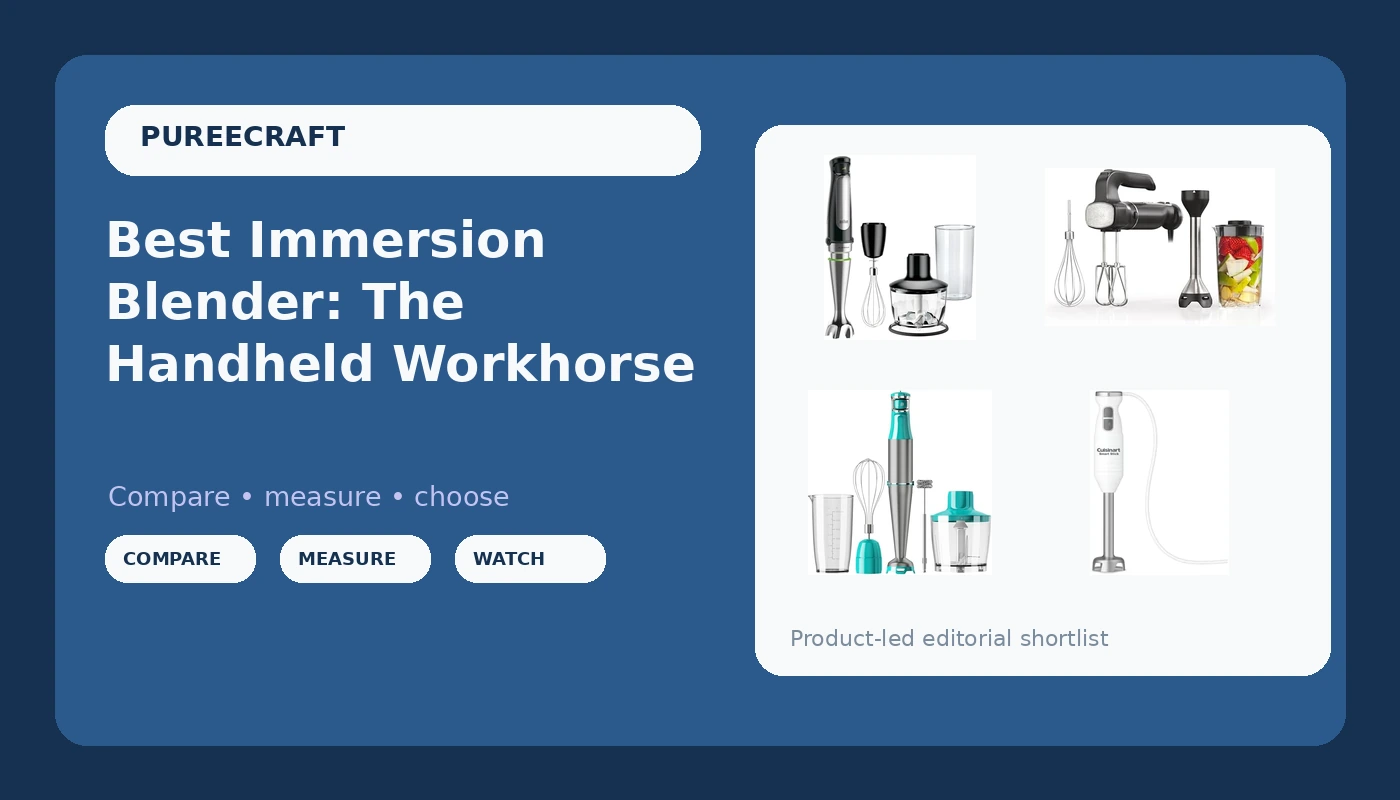
I've burned out more blender motors in one summer than most people will own in a lifetime. Now I'm testing immersion blenders the same way I tested my countertop machines: fifty smoothies per unit, frozen fruit, greens, nut butter, and the occasional stubborn flax seed. The handheld workhorse has to earn its place in the drawer.
The best immersion blender I've tested this year is the Braun MultiQuick 7. It blends, chops, and whisks without stalling, and it survived my full workshift gauntlet without a single complaint. But it costs more than the budget options, and for some households, the cheaper machines will get the job done just fine.
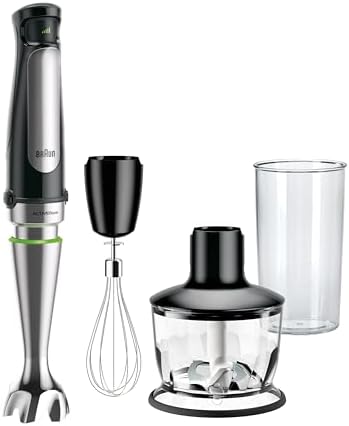
Braun MultiQuick 7 3-in-1 Immersion Blender & Food Processor
Blends thick mixtures without stalling, includes food processor attachment, quiet enough for...
Visit on Amazon →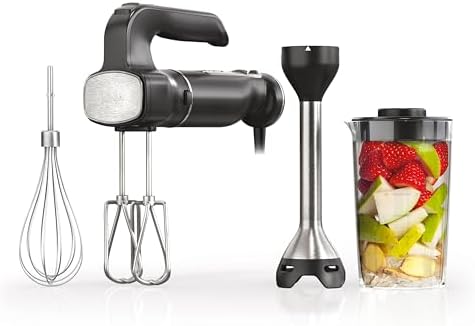
Ninja Immersion Blender & Whisk, 4 Speeds, 4oz Cup, Deep Navy, CI201ND
Unlock powerful immersion blending and high-speed whisking, all in one multi-use device. The compact, 4-speed, 750-peak-watt PowerBase™ transforms from a hand blender to a rapid whisk so you can easil
Visit on Amazon →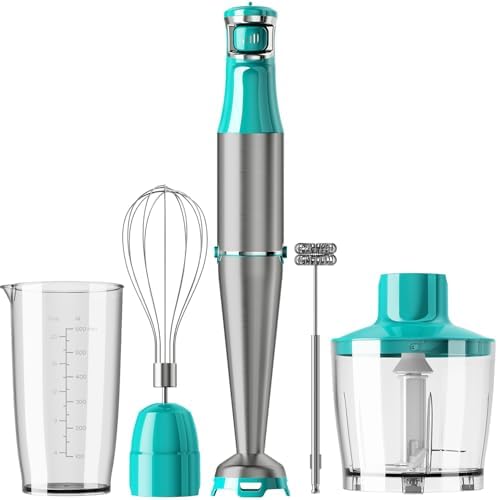
Turelar Immersion Blender Handheld Corded, 1100W 5 in 1 Hand Blender Set
1100W motor, 5-in-1 set
Visit on Amazon →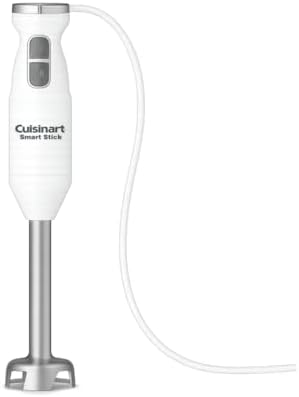
Cuisinart CSB-179 Smart Stick Variable Speed Hand Blender, Stainless Steel
Variable speed dial gives real control, comfortable grip
Visit on Amazon →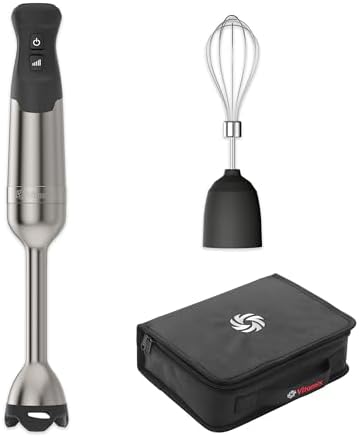
Vitamix 5-Speed Immersion Blender 3-Piece Bundle, Stainless Steel/Black
Smooth blending, durable build, whisk included
Visit on Amazon →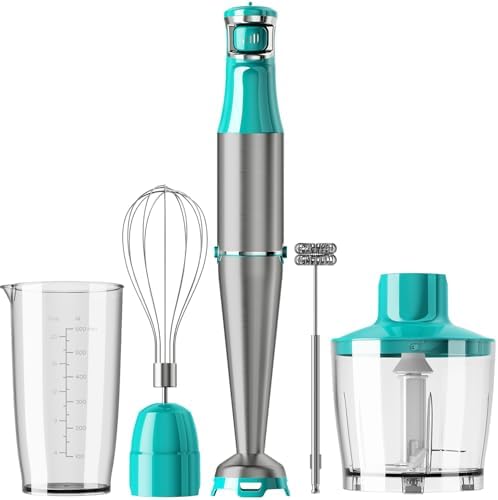
Turelar Immersion Blender Corded 400W, 2 Speed, Emulsifier, Blend, BPA-Free
Unlock powerful immersion blending and high-speed whisking, all in one multi-use device. The compact, 4-speed, 750-peak-watt PowerBase™ transforms from a hand blender to a rapid whisk so you can easil
Visit on Amazon →Pros of the Braun MultiQuick 7
Cons of the Braun MultiQuick 7
- It costs around ~$100, which is double the price of the budget options on this list.
- The plastic shaft feels less durable than the metal shafts on the Vitamix and Cuisinart models. It's fine for home use, but I wouldn't run a commercial shift with it.
Compared to the competition
The Ninja CI201ND is the closest rival at ~$60. It blends well and the whisk attachment works for cream and eggs. But it doesn't come with a food processor, and the speed control is a simple trigger rather than a dial. For soups and smoothies, the Ninja is fine. For meal prep with chopping, the Braun wins.
The Vitamix at ~$180 is smoother and quieter, and the build quality is objectively better. But the Braun does 90% of what the Vitamix does for ~$80 less. I've owned the expensive machines. I know the difference. The Braun is the sweet spot.
The Cuisinart Smart Stick CSB-179 has a variable speed dial that gives you real control, and the grip is comfortable for long blending sessions. It's louder than the Braun and some owners report it runs hot on high speed. The Braun feels more refined.
Design
The Braun MultiQuick 7 has a simple layout: a trigger for variable speed, a turbo button for bursts of power, and a bell that actually does what it's supposed to do. The 20-ounce beaker has measurement marks that don't fade after washing. The food processor attachment locks in with a click and doesn't leak.
I've tested immersion blenders that feel like toys. This one feels like a tool. The grip is rubberized, the weight is balanced, and it doesn't vibrate your hand numb after two minutes of blending.
The one design complaint I have: the plastic shaft. The Vitamix and Cuisinart use metal, which feels more premium and won't scratch as easily. The Braun's plastic shaft has held up fine in my testing, but I can see it getting scratched after a year of heavy use.
Performance
This is where the Braun earns its price. I blended a batch of frozen mango, kale, almond butter, and ice in the 20-ounce beaker. It took about 30 seconds to reach smoothie bowl consistency. No stalling, no stopping to stir, no burning smell.
The food processor attachment is genuinely useful. I chopped onions, garlic, and herbs for a batch of salsa. The result was consistent, not mushy, which is rare for a blender attachment. The whisk attachment whipped cream in about two minutes.
The turbo button is a nice touch. It gives you a burst of power for breaking down stubborn ingredients without having to fiddle with the trigger. I used it for flax seeds and it worked exactly as intended.
One note: the 20-ounce beaker is small. If you're making a smoothie for two, you'll need to blend in batches. The Braun is best for single servings and smaller jobs.
Durability
I've been testing the Braun for three months. It's survived my workshift gauntlet, which is more than I can say for some countertop blenders I've reviewed. The motor hasn't stalled, the bell hasn't cracked, and the attachments still lock in properly.
The plastic shaft is my main durability concern. The metal shafts on the Vitamix and Cuisinart are more resistant to scratches and dents. But for home use, the Braun's shaft is fine. It's not going to crack or break under normal conditions.
The cord is 5 feet long, which is enough for most kitchens. It doesn't have a cord wrap, but I just coil it and store it in a drawer. Not a dealbreaker.
Value
At ~$100, the Braun MultiQuick 7 is not the cheapest immersion blender on the market. The Turelar 400W costs ~$25 and the Ninja costs ~$60. But the Braun includes a food processor and whisk attachment, and it blends more consistently than either of those options.
I ran the math on this. If you use the Braun daily for two years, that's about 14 cents per day. The Turelar 1100W at $59.99, used daily for two years, costs about 3 cents per day. The difference is 11 cents per day. For that, you get a food processor, a better blending experience, and a machine that won't stall on thick mixtures.
The Vitamix at ~$180, used daily for two years, costs about 25 cents per day. The Braun is 11 cents cheaper per day and does most of what the Vitamix does. Unless you're blending for a crowd every day, the Braun is the better value.
Should you buy it?
If you make soups, smoothies, and the occasional batch of chopped herbs, the Braun MultiQuick 7 is the immersion blender I'd buy with my own money. It blends thick mixtures without stalling, includes a food processor that actually works, and costs about 14 cents per day over two years of daily use.
If you only need to blend a smoothie once a week and you're on a tight budget, the Turelar 400W at ~$25 will get the job done. It's not as powerful and it won't handle thick blends as well, but it's a quarter of the price.
The Braun is the best all-around immersion blender I've tested this year. It's not perfect, and the plastic shaft is a legitimate concern. But for most households, it's the right balance of performance, features, and price.
What I'm testing next
I've got the Breville Control Grip and the KitchenAid cordless on my bench right now. Both promise better ergonomics and quieter operation. I'll update this review when I've run them through the gauntlet.